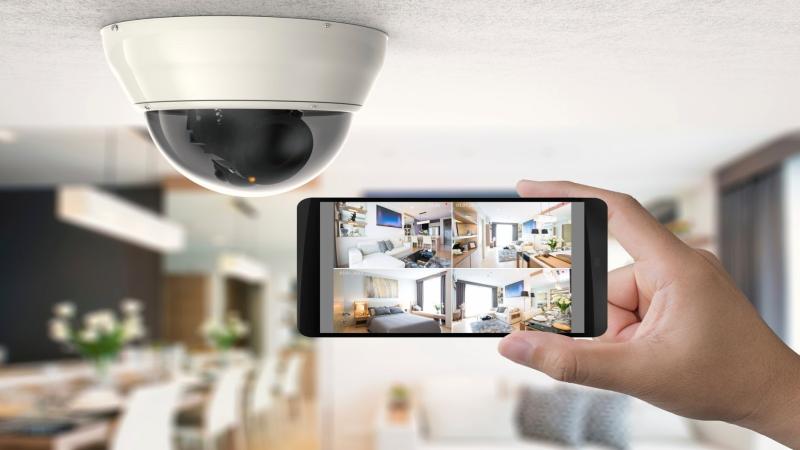
Jul 1,Kathamndu: If you’re looking for a CCTV package for your home or business, you’ve come to the correct place where we have listed 10 Best Shopping Tips for CCTV. Security and peace of mind are provided by CCTV cameras. When burglars or other criminals target homes or businesses, CCTV video footage can be used to quickly identify the crime and the perpetrators. Surveillance studies undertaken in cities, particularly in crime-prone areas, reveal that installing CCTV cameras acts as a crime deterrent, and media reports indicate that the number of crime incidents recorded from places where CCTV cameras are active has decreased significantly.
After you’ve decided to buy and install surveillance cameras, the following step is to find the greatest match. How do you choose the best option for you when there are so many? One deciding element is price. Many websites now offer new low-cost CCTV camera packages starting at $599. A CCTV package does not have to be an expensive affair, with price points to suit every budget. A first-time buyer will be confronted with a plethora of choices: What type of camera or viewing resolution is the best? What are the optimal frame rates for watching movies? Is it necessary for me to have night vision? What amount of video recording and storage capacity will I require?
We’ll break down these topics for you in this article and help you choose the finest CCTV for your needs:
List of 10 Best Shopping Tips for CCTV Cameras:
1. CCTV camera resolution
Most tech-savvy consumers are adept with phone cameras and video camcorders and can converse fluently about megapixels and camera resolutions. When looking into CCTV camera packages, you may come across the phrase TVL, which stands for television lines. What exactly are these? The majority of CCTV cameras are analog cameras or analog television systems. As a result, instead of pixels, we refer to TV lines. We understand that the larger the pixel count, the better the image quality. Similarly, the higher the number of TV lines (subject to lens size, light, and other factors), the better the picture quality on your CCTV camera.
Camera resolutions for most residential and business security applications can range from 420 to 700 TV lines. In fact, the most you’ll find is 700 TV lines. When you get into the digital CCTV field, you’ll likely find more expensive cameras with significantly higher resolution.
2. Internet viewing resolution
The CIF (Common Intermediate Format) measuring unit is used to measure internet viewing resolution. It refers to a video sequence with a resolution of 352 x 288 pixels that can be converted to PAL or NTSC for viewing. Confused? Let’s give it another shot. Frames per second are the rate at which your camera captures a picture. The CIF resolution refers to how this image or sequence of images is recorded by your DVR. Storage was expensive in the early days of the hard drive or hard disk business.
People, understandably, decided to make a compromise and capture low-resolution photographs at the expense of 4 CIF and the maximum frame rate. With the cost of video storage falling, you can now capture photos on 4 CIF and achieve maximum detail.
4CIF, as the name implies, provides nearly four times the image size and is very useful for facial identification and image clarity in places like front desks, doors, and bank operations. You can use CIF while filming in other areas where you want fluid action and no lag in motion capture.
3. Internet viewing frame rate
In terms of collected video material and its quality, we discussed frame rate (frames per second). Regardless of the type of video capture gear you use, the premise stays the same. The technology takes photos and plays them again in rapid succession, giving the impression of a fluid movement or action. In terms of CCTV camera packages, anything above 30 frames per second (fps) will produce smooth footage with no jerks. Many places now offer fantastic rates on even 120 fps CCTV camera packages, getting it as close to “real-time” as possible.
4. All weather CCTV cameras
When looking for a CCTV package, you should think about where the cameras will be placed. You can choose from a number of waterproof cameras depending on whether you want cameras positioned outdoors or indoors. Cameras that are waterproof are better equipped to survive damage from rain, snow, and humidity. Some weatherproof cameras include a sealed glass casing to protect them from the elements. Another benefit of sealed weatherproof cameras is that they are protected from dirt, dust, floating debris, and humidity, even in enclosed locations like huge warehouses, storage facilities, inside factories, and car repair shops.
5. Day and night recording
If you’re thinking about buying CCTV cameras for your house or company, you should consider cameras with night vision and 24-hour day and night recording. Break-ins, thefts, and vandalism are all common at night, and low visibility is the number one reason criminals get away with it. Despite the darkness, night vision and infrared cameras capture high-quality images. They improve the definition of things, people, and animals, making it easier to recognize and identify them. The efficiency of night vision CCTV cameras may be determined by the area of focus, installation angle, lens size, and pan tilt zoom (PTZ) characteristics.
Infrared camera installation may also necessitate setting up at night with infrared illumination or simulating nighttime settings. If you plan to record 24 hours a day, make sure to shop for DVRs with plenty of capacity and back up regularly.
6. Online viewing
Client-centric services that go beyond installation and maintenance are available from many security and surveillance firms. One such option is purchasing a domain name with your security provider and having them create a personalized website that allows you to view your property from anywhere at any time using a PC, tablet, or web-enabled mobile phone. Simply punch in your unique URL, and you’ll be instantaneously and in real-time connected to your CCTV-protected property, house, or company. This is especially useful if you want to keep an eye on your business while you’re away from home, or if you want to keep an eye on your children, pets, or the elderly while you’re at work.
7. Tracking via smart phones
With smartphones rising to the challenge of personal computers, it’s no surprise that security businesses are now offering wireless tracking via web-enabled smartphones. You can personalize the security viewing system on your smartphone by creating a domain name with a specific URL. This does not necessitate the use of any third-party apps or software. These functionalities may be included in the CCTV packages sold by security system companies for a small fee.
8. Video compression
Compressing massive video data into a format that can be easily stored or communicated is an important feature of CCTV installation. In order to display compressed data, it must go through the reverse procedure. Standardizing this method helps varied devices to communicate effectively with one another. H.264 compression, which is utilized by a variety of HD and Blu-ray disc players, streaming video formats, and other Internet applications, is the gold standard in the CCTV sector. Video footage transmission from CCTV cameras employing H.264 video compression is of the highest quality.
9. Alert systems: Message or email, motion detection
CCTV cameras allow you to collect images as they happen, or you can add or purchase a feature called motion detection to your CCTV cameras. The only movement in front of the camera triggers image capture and recording in the latter situation. If you want to record with less disk space, motion detection comes in helpful. Sudden motions may be captured in a predetermined calm region, making it simple to preserve little data and evaluate it afterward. Many motion detector cameras come with an alarm or sound system that is activated when movement is detected. Some surveillance firms may additionally offer an email alert system that will notify you if there is an intrusion or movement in the monitored area.
10. Recording and storing
Without a trustworthy DVR system that can record and preserve your data for future reference, any CCTV package is incomplete. You can look at your monitored region on a specifically defined domain using online recording and watching. Both your PC and your smartphone can be used for remote monitoring. Offline recording and storage necessitate hard drive capacity, which can be purchased based on your requirements. Some hard disks have capacities ranging from 500 GB to 2 TB, allowing you to store video data for up to 12 months.
CCTV cameras let you catch, record and save the video in order to keep an eye on the security of your house or business. Some of the aforementioned pointers should assist you in navigating the surveillance and CCTV sector and getting the finest bargain possible. Additional security measures, such as Digital Lock or Fingerprint Lock, may also be considered to provide a more secure environment for your family and associates. These features turn your house and business into a fortress, with only the individuals you trust having access. CCTV camera systems, on the other hand, aren’t just for crime prevention or crime detection. They give your loved ones peace of mind knowing they are always safe.
















 Indian Rupee
 U.S. Dollar
 European Euro
 UK Pound Sterling
 Swiss Franc
 Australian Dollar
 Canadian Dollar
 Singapore Dollar
 Japanese Yen
 Chinese Yuan
 Saudi Arabian Riyal
 Qatari Riyal
 Thai Baht
 UAE Dirham
 Malaysian Ringgit
 South Korean Won
 Swedish Kroner
 Danish Kroner
 Hong Kong Dollar
 Kuwaity Dinar
 Bahrain Dinar