February 3, Kathmandu
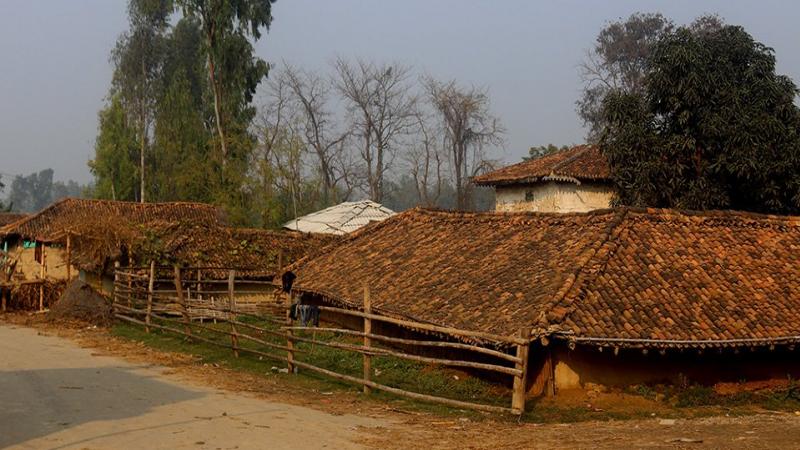
In the rural settlements of the Terai-Madhesh, it is difficult to see the houses with thatched roofs.
Except in some old houses, the roof of the new house does not have a thatched roof. Newly built houses are covered with tiles and alabaster. Rajesh Kushwaha, a youth from Dhankaul Gaonpalika-1, Sekhauna, said, "It is difficult to see houses with khapada roofs in Madhes now, only in some places."
Khapada is made of clay. According to the elders, a house with a thatched roof provides warmth in cold weather and coolness in hot weather. The use of khapada has also been stopped as it is more expensive than tiles and alabaster. With the decline of usage, even those who make cloth have recently joined other professions.
Krishna Prasad Barma, chairman of Ramnagar village municipality in the far south-western part of the district, said that the use of tiles and alabaster instead of khapada has increased as the economic situation is improving. "Many people have started building concrete houses now. Even when building mud houses, tiles and alabaster are being used more," said village chairman Burma.
Many houses have been built in Dhankaul, Basbaria, Ramnagar, Balara, Godaita, Vishnu, Chakraghatta and other municipalities in the south-western region of the district where khapada is widely used. In the south-eastern region, Brahmapuri, Parsa, Chandranagar, Haripurwa and other areas have also been left to build houses with thatched roofs.
Former teacher Kaushal Kishor Rai, a resident of Malangwa district headquarters, says that most of the originality of Madhes is being lost due to increasing urbanization. "Not only are the roof of Khapada, but most of the original art objects that identify the Madhes disappearing," he said. "The influence of other regions' culture is growing in the Madhesh."





 Indian Rupee
 U.S. Dollar
 European Euro
 UK Pound Sterling
 Swiss Franc
 Australian Dollar
 Canadian Dollar
 Singapore Dollar
 Japanese Yen
 Chinese Yuan
 Saudi Arabian Riyal
 Qatari Riyal
 Thai Baht
 UAE Dirham
 Malaysian Ringgit
 South Korean Won
 Swedish Kroner
 Danish Kroner
 Hong Kong Dollar
 Kuwaity Dinar
 Bahrain Dinar