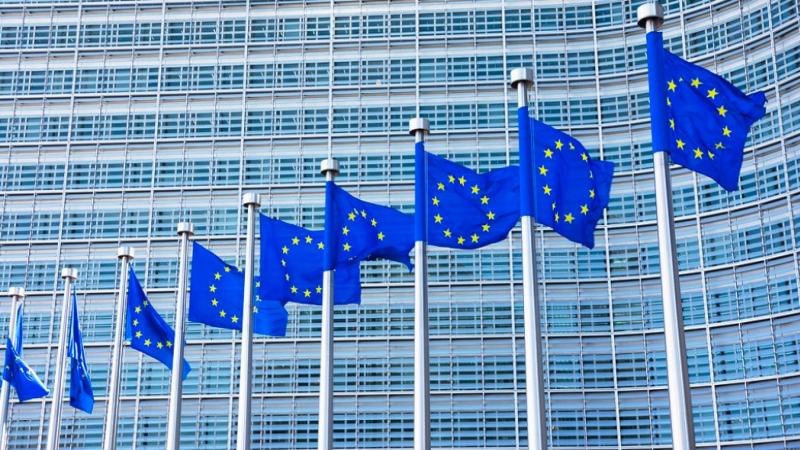
Dec 04, Kathmandu - A new survey by polling group Cluster 17, published Thursday in the French international affairs journal Grand Continent, finds that a majority of citizens in nine European Union (EU) countries see a “high risk” of war breaking out between EU member states and Russia.
The war, which began after Russia's full-scale invasion of Ukraine in 2022, has been going on for more than three years, and concerns are growing in Europe that the conflict could spread further. Last month, France's top general Fabian Mandon warned that Russia was preparing for a new conflict by 2030.
A few days later, Russian President Vladimir Putin made a strong statement, saying, “If Europe wants war, we are ready now.” According to the survey, 51 percent of respondents said they believed there was a “high” or “very high” risk that Russia could enter into direct conflict with their country in the coming year. The study, which included a sample of 9,553 people, was conducted in late November.
The survey included opinions from France, Germany, Italy, Spain, Poland, Portugal, Croatia, Belgium and the Netherlands. The survey involved more than 1,000 people from each country. Fears of open war with Russia varied by country. In Poland, which shares borders with Russia and Belarus, 77 percent of citizens considered the risk to be “high” or “very high.” In France, the proportion fell to 54 percent, while in Germany, 51 percent expressed a similar opinion. In contrast, 65 percent of respondents in Italy considered the risk to be “low” or “almost nonexistent.”
In addition, 81 percent of respondents said the likelihood of war with China in the coming year was very low. Amid debates about the re-establishment of military service in various European countries, the survey showed widespread skepticism among citizens about the capabilities of their own military. 69 percent of respondents said their country was “not at all” or “probably not” capable of defending itself against a Russian attack.
France, the only country surveyed with nuclear weapons, showed relatively high confidence. There, 44 percent of citizens believed their country was “completely” or “normally” capable of defending itself. On the other hand, respondents in Belgium, Italy and Portugal were the most pessimistic – 87 percent, 85 percent and 85 percent, respectively, said their countries would be unable to survive a war.
Terrorism was also found to be the most immediate security threat in the nine countries surveyed. 63 percent of respondents said the risk of open conflict with terrorist groups was “high” or “very high.”















 Indian Rupee
 U.S. Dollar
 European Euro
 UK Pound Sterling
 Swiss Franc
 Australian Dollar
 Canadian Dollar
 Singapore Dollar
 Japanese Yen
 Chinese Yuan
 Saudi Arabian Riyal
 Qatari Riyal
 Thai Baht
 UAE Dirham
 Malaysian Ringgit
 South Korean Won
 Swedish Kroner
 Danish Kroner
 Hong Kong Dollar
 Kuwaity Dinar
 Bahrain Dinar