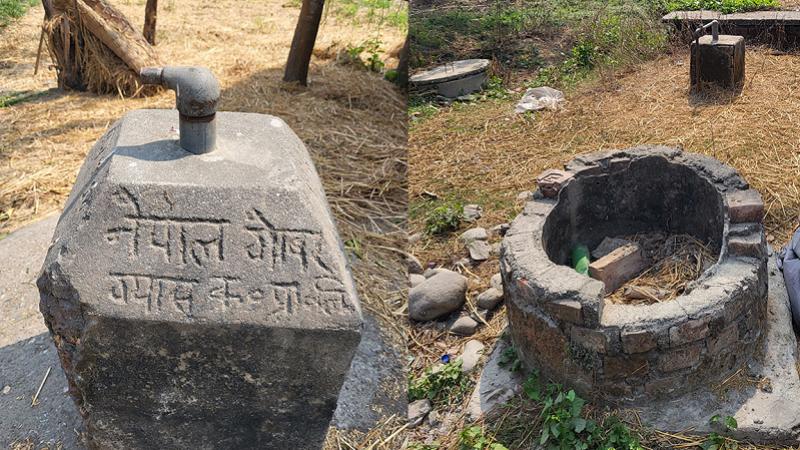
Dec 09, Kathmandu - Even after decades of promoting household biogas in Nepal, its current state has become worrisome. According to a new study, about 54 percent of domestic biogas plants installed across the country have reached a point of inoperability.
A study conducted in Tanuhan found that 59 percent of the plants observed in the district were completely closed. Many plants had cracked digesters, damaged gas tanks, jammed mixers, and rusted pipelines.
A study conducted by Kathmandu University's Renewable and Sustainable Energy Laboratory has highlighted weaknesses in the biogas sector. According to the research, the nationwide biogas promotion campaign is weakening due to technical weaknesses, changes in rural lifestyles, and policy errors.
The study involved field observations in ten districts and interviews with 2,559 households. More than half of the plants included in the study were found to be closed, indicating that an investment of about Rs 110 million was wasted from the study sample alone.
There are about 450,000 biogas plants installed across the country. If the situation continues, tens of billions of rupees invested in the biogas sector will be at risk, the study concludes.
According to Kathmandu University professor Sunil Prasad Lohani, transparent subsidies, involvement of skilled technicians, effective service networks and regular monitoring are indispensable to save the biogas sector. “If there is no immediate policy reform, the biogas sector may completely collapse,” he said.

The study also showed that many of the plants that are in operation are producing less than half of their daily design capacity. According to Poshan Shrestha, co-author of the study, many families have become frustrated with biogas due to persistent low gas production and lack of maintenance services, which can be solved with simple maintenance such as cracked digesters, rusted pipes, and broken mixers.
















 Indian Rupee
 U.S. Dollar
 European Euro
 UK Pound Sterling
 Swiss Franc
 Australian Dollar
 Canadian Dollar
 Singapore Dollar
 Japanese Yen
 Chinese Yuan
 Saudi Arabian Riyal
 Qatari Riyal
 Thai Baht
 UAE Dirham
 Malaysian Ringgit
 South Korean Won
 Swedish Kroner
 Danish Kroner
 Hong Kong Dollar
 Kuwaity Dinar
 Bahrain Dinar