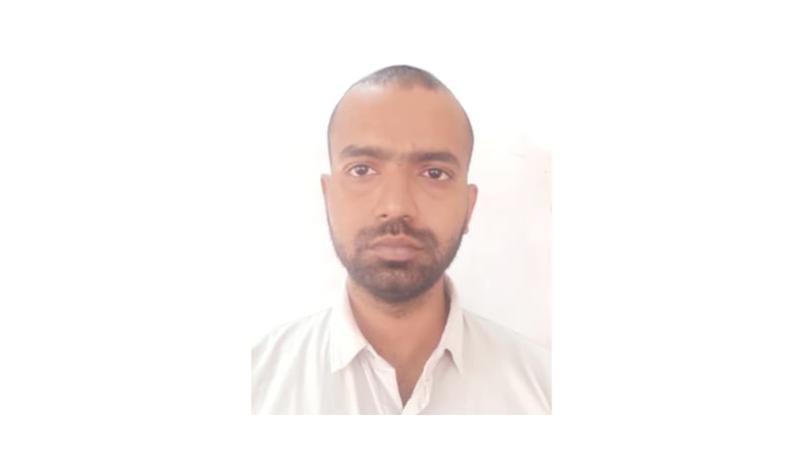
Author: Arjun Dahal
Dec 12, Kathmandu,
Conducting Social Experiment
We live in a society where we find people believing in various ideologies that influence them as a result of influence; people follow those ideologies. Humans, as social animals, have peculiar social behaviours which has been a field of formal and systematic study since ancient times. In the particular context of Nepal, we have seen a huge community of people with their own ideologies. Through this work, we shall attempt to discuss the general behaviour of people based on social experiments as a qualitative study of human society.
We shall begin with a simple demonstration in the Kathmandu valley. In Kathmandu valley, the local level government conducts garbage and waste management as per their schedule by sending a truck and wastage collecting workers in the various localities of the local government. A worker whistles in the road and continues whistling while walking down the road. On hearing the whistle, people recognize that whistle sound as a signal provided to bring and dump their waste in the truck or at a particular place where some vehicles would recover it and dump it in some other places. The author conducted a social experiment in the streets of Jorpati, Kathmandu. With ragged clothes, he walked blowing whistles in the streets of Jorpati, and as expected people immediately started coming out of their hands and rent by carrying wastages. The author showed them the place where the wastage would be recovered later on. Thus, a social experiment was conducted without anyone noticing. And the outcome was terrifying. Terrifying in the sense that people of the society had been so adjusted with that, every time they would listen to a whistle and see a person outside, then they would immediately throw out their wastage to the vehicle provided by the local government. People rush out without thinking if the person is just blowing the whistle for fun or for collecting the garbage. This was a social experiment based on the physical world.
Now comes the digital world. People these days prefer the digital world instead of the physical world for exchanging information. A social experiment was conducted on the social networking platform “Facebook,”. The author tagged his friend in a post with the caption, “Congratulations! You have achieved the thing which seems impossible for the rest. May god be with you.”. The author then waited patiently, and as per the post, “Congratulations” flooded in and not a single person asked why he was being congratulated or what was the special occasion that led him to be congratulated. This was another social experiment conducted on a digital platfor,m which demonstrated similar social behaviour as mentioned earlier. People run after the words with their beliefs that have been shaped in their mind as a long-term mental exercise and work.
These two social experiments demonstrated that our Nepalese society relies on their beliefs as a long-term mental memory and has become a pop culture for them. This has led towards crimes too, as people are easily lured on the basis of their beliefs for fake information that seems as a polished truth. As a part of pop culture, the system of pranks is widely increasing which, even when ethically discussed, becomes a social experiment and, when discussed unethically, becomes a tool for crime. As depicted inthe Bollywood movie PK, we even worship a stone when placed with incense sticks and make it as a religious site.
Western world also conducts social experiments based on strict monitoring from concerned authorities and media outlets like daily newspapers covering that topic. Such practices should be introduced and encouraged even in Nepalese society, so that we can learn our behaviour and take preventive measures for the loopholes that may occur as a result of our beliefs and mental cognition.









 Indian Rupee
 U.S. Dollar
 European Euro
 UK Pound Sterling
 Swiss Franc
 Australian Dollar
 Canadian Dollar
 Singapore Dollar
 Japanese Yen
 Chinese Yuan
 Saudi Arabian Riyal
 Qatari Riyal
 Thai Baht
 UAE Dirham
 Malaysian Ringgit
 South Korean Won
 Swedish Kroner
 Danish Kroner
 Hong Kong Dollar
 Kuwaity Dinar
 Bahrain Dinar