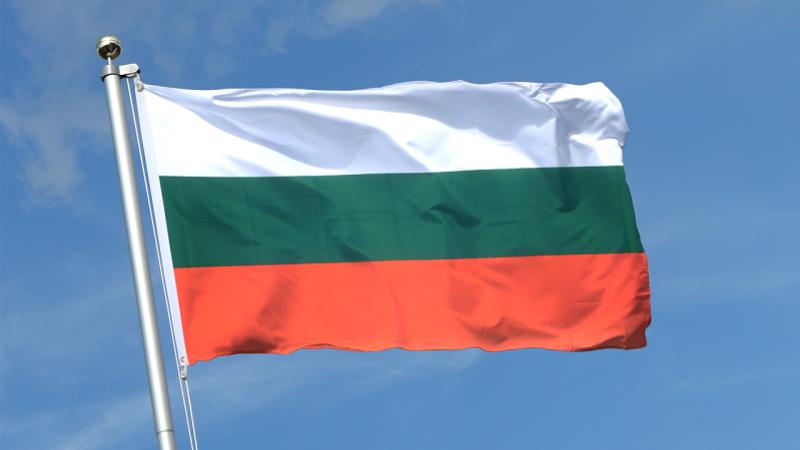
Dec 28, Kathmandu - Bulgaria is set to become the 21st country to adopt the Euro on Thursday, marking a significant milestone in its integration into the European Union's single currency zone. However, this historic move has sparked widespread fear and uncertainty across the country.
Many citizens fear that adopting the Euro could lead to inflation and increase social and economic instability, especially in Bulgaria, which is among the poorest EU member states. A protest campaign under the slogan "Save the Bulgarian Lev" was also launched this year, highlighting negative public perceptions of the Euro and concerns over rising prices.
Despite these fears, successive governments have continued to emphasize the importance of joining the Eurozone. Supporters argue that adopting the Euro will strengthen the economy, enhance relations with Western countries, and reduce Russian influence.
The Euro was initially introduced in 2002 by 12 countries, and its expansion has continued over the years. Croatia was the latest to join in 2023.
Bulgaria faces unique challenges such as political instability, anti-corruption protests, and frequent elections. Recently, the fall of a conservative government has brought the country to its eighth election in just five years.
According to Borjana Dimitrova, an analyst at Alpha Research, opposition politicians against the Euro may exploit any problems arising from its adoption for political gains. She notes that such issues could become rallying points for Eurosceptic rhetoric. While far-right and pro-Russian parties are leading anti-Euro protests, many rural and impoverished citizens remain naturally anxious about the new currency.
Bulgaria’s Chupren village resident, 53-year-old small business owner Bilyana Nikolova, expressed her concern about rising prices after hearing from friends in Western Europe about inflation, fearing that prices will also increase locally.
According to the European Union’s Eurobarometer survey, 49% of Bulgarians still oppose the Euro. After experiencing hyperinflation in the 1990s, Bulgaria pegged its currency to the German Mark and later to the Euro, making it dependent on the European Central Bank.
Jorge Angelov, senior economist at the Open Society Institute, explains that adopting the Euro will give Bulgaria direct participation in the monetary decision-making process. Since becoming an EU member in 2007, Bulgaria joined the Euro “waiting room” alongside Croatia in 2020.
European Central Bank President Christine Lagarde highlighted the benefits of adopting the Euro, including easier trade, lower financial costs, and price stability. She added that small and medium-sized enterprises could save around 50 million Euros in currency exchange fees, and the tourism sector, contributing about 8% to GDP, is expected to benefit significantly.
Lagarde also stated that the impact on consumer prices would be moderate and short-term, estimating an increase of only 0.2 to 0.4 percentage points based on past experiences. However, there are concerns that already-inflation-stricken consumers may face additional burdens.
According to the National Statistical Institute, food prices increased by 5% annually in November, exceeding the EU average. The parliament has established a special monitoring mechanism to oversee price increases and prevent any “unfair” price hikes linked to the Euro transition.
Nevertheless, analysts warn that political uncertainty could delay necessary anti-corruption reforms. Angelov notes that only with a stable government for at least one to two years can Bulgaria fully harness the benefits of Eurozone membership.














 Indian Rupee
 U.S. Dollar
 European Euro
 UK Pound Sterling
 Swiss Franc
 Australian Dollar
 Canadian Dollar
 Singapore Dollar
 Japanese Yen
 Chinese Yuan
 Saudi Arabian Riyal
 Qatari Riyal
 Thai Baht
 UAE Dirham
 Malaysian Ringgit
 South Korean Won
 Swedish Kroner
 Danish Kroner
 Hong Kong Dollar
 Kuwaity Dinar
 Bahrain Dinar