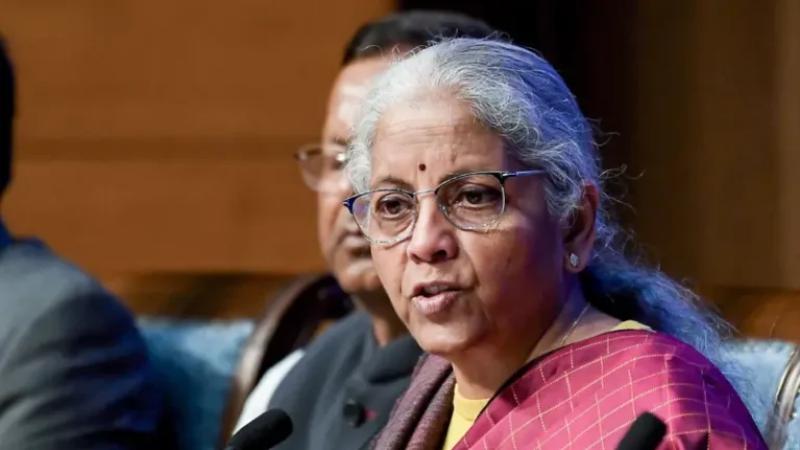
Feb 03, Kathmandu - The budget announced by the Indian government for the financial year 2026/27 seems to have set a long-term strategic direction by prioritizing the health sector. The budget presented in Parliament by Finance Minister Nirmala Sitharaman clearly reflects the government's ambition to make India a global hub for treatment, pharmaceutical manufacturing and medical tourism through investments in the health sector, along with defense and infrastructure.
The most notable aspect of this year's budget is the complete removal of import duty on drugs used in the treatment of cancer and rare diseases. The five percent import duty previously imposed on 17 types of drugs used for cancer treatment has been abolished. In addition, it has been decided to completely exempt import duty on seven types of rare diseases such as haemophilia, sickle cell anemia and muscular dystrophy. This is expected to help reduce the burden of treatment costs for millions of patients suffering from serious diseases.
Another important aspect of the health budget seems to focus on drug research and production. To make India a ‘global bio-pharma manufacturing hub’, it has been announced to set up more national-level laboratories for drug testing and to operate a WHO Traditional Medicine Centre. It has been said that an investment of 10,000 crore Indian rupees will be made for this, which analysts believe will significantly increase India’s drug research capacity.
The budget has also given special priority to Ayurveda and traditional medicine systems. It has been announced to set up three new All-India Medical Institutes (AIIMS) and a policy has been put forward to promote the export of high-quality Ayurvedic products. This seems to have the aim of further establishing India’s traditional medicine system in the international market.
Another important part of the budget is the announcement of setting up regional-level medical centres in five regions of the country to institutionally promote medical tourism. These centres, which will be run with the participation of the private sector, are expected to increase the number of foreign patients coming to India for treatment and help in earning foreign exchange.
The budget has also emphasized on health manpower development. The target is to produce one lakh health specialists and one lakh 50 thousand caregivers in the next five years. A plan has also been put forward to create employment in the health sector through the development of AYUSH centres, Nida facilities, post-care and rehabilitation centres.
In addition, the development of Buddhist circuits in the northeastern states—Arunachal Pradesh, Assam, Sikkim, Mizoram and Tripura—along with the establishment of emergency and trauma care centres has been announced. This reflects the government’s strategy to improve healthcare access in these regions and to link health infrastructure with tourism.
Overall, India’s health budget for 2026/27 has given a clear signal to expand treatment access, strengthen drug research and strengthen India’s presence in the global market through medical diplomacy. Its effectiveness will now depend on the speed and transparency of implementation.










 Indian Rupee
 U.S. Dollar
 European Euro
 UK Pound Sterling
 Swiss Franc
 Australian Dollar
 Canadian Dollar
 Singapore Dollar
 Japanese Yen
 Chinese Yuan
 Saudi Arabian Riyal
 Qatari Riyal
 Thai Baht
 UAE Dirham
 Malaysian Ringgit
 South Korean Won
 Swedish Kroner
 Danish Kroner
 Hong Kong Dollar
 Kuwaity Dinar
 Bahrain Dinar