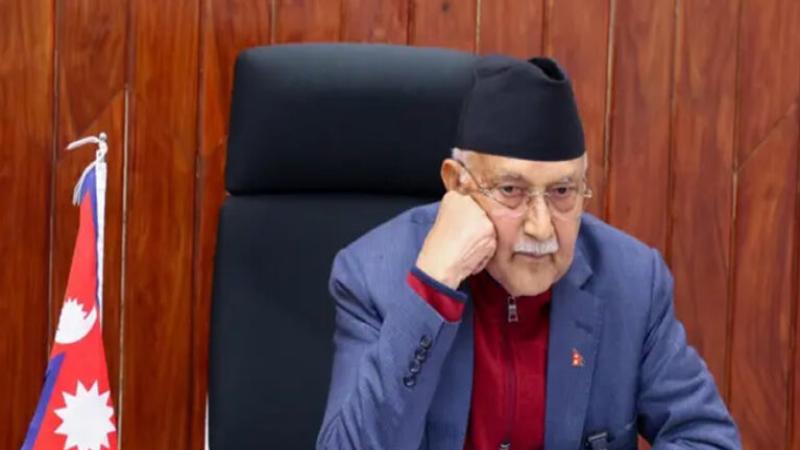
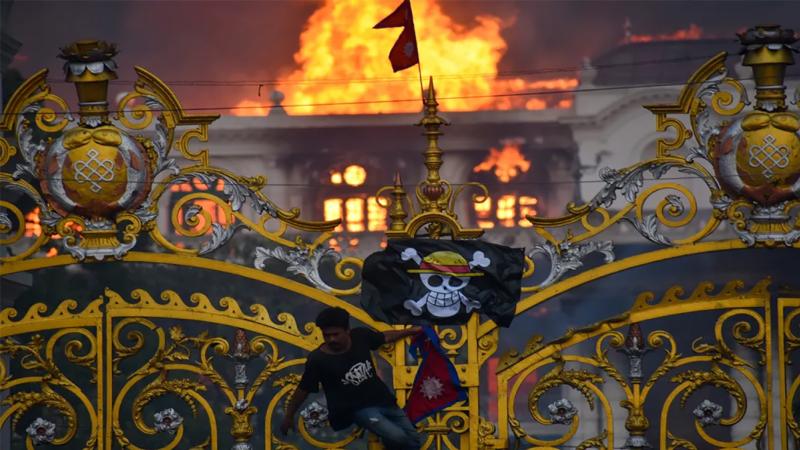
Mar 26, Kathmandu - The violent incidents that occurred on August 23 and 24 during the Ganjha Movement have raised serious questions about the leadership of then-Prime Minister KP Sharma Oli. A recent commission report criticizes Oli’s inability to effectively respond to the crisis, despite the ultimate political and administrative responsibility resting on his shoulders as the head of state.
The report reveals that, during Oli’s tenure, key security agencies, including the National Investigation Department, were transferred from the Home Ministry to the Prime Minister's Office, reflecting a centralized approach. However, the department’s underwhelming response—estimating only 3,000 to 5,000 protesters on the streets—demonstrated significant shortcomings in security preparedness.
According to the commission, weaknesses in intelligence analysis, cyber surveillance, and risk assessment further exposed the Prime Minister’s Office’s incapacity to manage the situation effectively. Despite a National Security Council meeting held on the evening of August 23, no concrete, written, and actionable decisions could be made to address the escalating risks for the following day.
The report also highlights that there was insufficient study and security analysis before lifting restrictions on social media platforms. During the tense four-hour clash in front of the Federal Parliament building, information about the violence reached the highest levels of government, yet security agencies failed to coordinate, deploy the military, or take decisive steps to control the unrest.
The commission concludes that the lack of timely leadership resulted in the protest turning more violent, ultimately threatening sensitive government establishments such as the Prime Minister’s residence and the Parliament building.










 Indian Rupee
 U.S. Dollar
 European Euro
 UK Pound Sterling
 Swiss Franc
 Australian Dollar
 Canadian Dollar
 Singapore Dollar
 Japanese Yen
 Chinese Yuan
 Saudi Arabian Riyal
 Qatari Riyal
 Thai Baht
 UAE Dirham
 Malaysian Ringgit
 South Korean Won
 Swedish Kroner
 Danish Kroner
 Hong Kong Dollar
 Kuwaity Dinar
 Bahrain Dinar