
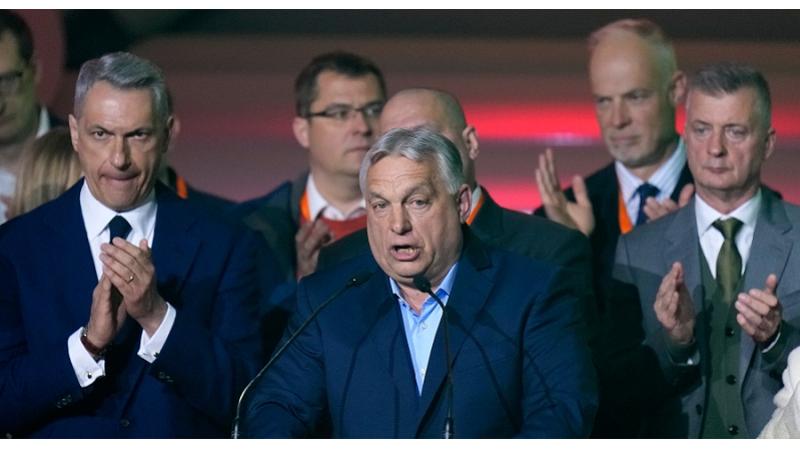
Apr 13, Kathmandu - Hungary’s long-standing Prime Minister Viktor Orbán, who has been in power for 16 years, has finally been defeated. Voters expressed their discontent with authoritarian tendencies and far-right politics, opting for a new leadership that supports European integration, signaling a potential shift in the country’s political direction.
Peter Magyar, a former ally of Orbán, emerged as the clear winner by championing an agenda focused on anti-corruption measures, reforms in public service, and restoring ties with the European Union (EU) and NATO. Early results indicate that Magyar’s Tisza Party secured approximately 53% of the votes, while Orbán’s Fidesz Party was limited to around 37%. Out of 94 electoral districts, Magyar maintained a commanding lead in 94 areas, cementing his victory.
Orbán, accepting his defeat, described the outcome as “painful” and pledged to serve the nation from the opposition. Known for close ties with U.S. President Donald Trump and Russian President Vladimir Putin, Orbán’s foreign policy has been a subject of controversy, especially in recent years.
Magyar’s win is expected to shift the power balance within the EU. Orbán has faced criticism for repeatedly blocking EU decisions through vetoes and moving closer to Russia, notably in the context of the Ukraine conflict, which had caused discomfort among European leaders.
Celebrations erupted in Budapest following the election results, with thousands of supporters gathering along the banks of the Danube River to mark the victory. Streets were filled with cheers and banners as Magyar addressed his supporters, stating, “Today, truth has triumphed over lies. We understand our responsibility for our country.”
With around 80% voter turnout, this election is considered one of the highest in Hungary's post-communist history, reflecting a clear desire among the populace for change, according to analysts.
During his tenure, Orbán faced accusations of curbing media freedom, suppressing minority rights, and pressuring institutional structures. He has also denied allegations of favoring close business groups connected to his administration.
The key question now is whether Hungary, under Magyar’s leadership, will re-align with Europe or continue its previous divided political stance. Magyar himself had previously described this election as a choice “between East and West.”








 Indian Rupee
 U.S. Dollar
 European Euro
 UK Pound Sterling
 Swiss Franc
 Australian Dollar
 Canadian Dollar
 Singapore Dollar
 Japanese Yen
 Chinese Yuan
 Saudi Arabian Riyal
 Qatari Riyal
 Thai Baht
 UAE Dirham
 Malaysian Ringgit
 South Korean Won
 Swedish Kroner
 Danish Kroner
 Hong Kong Dollar
 Kuwaity Dinar
 Bahrain Dinar