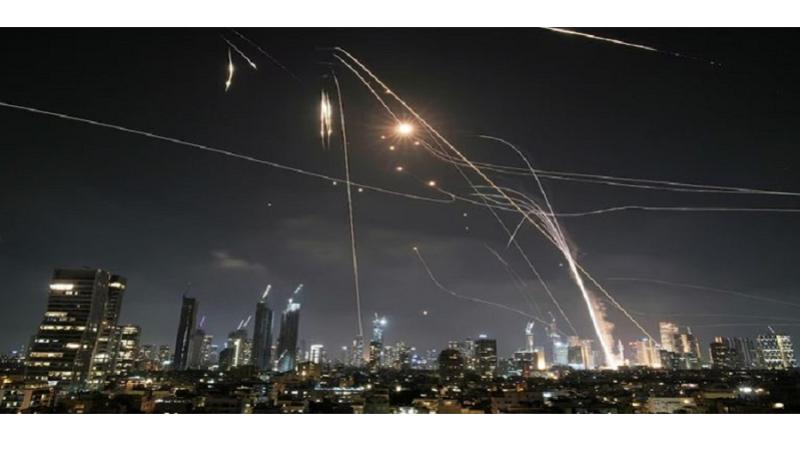
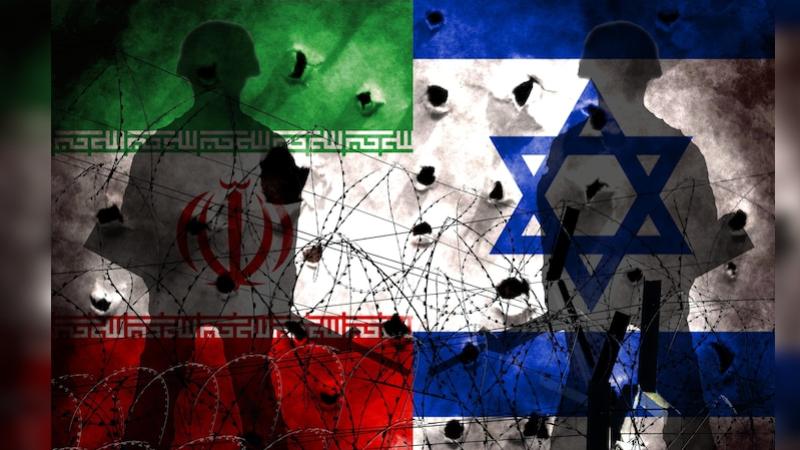
Apr 13, Kathmandu - The Middle East tensions are moving towards a critical phase, with multiple factors fueling the region's volatility. Following failed talks between the United States and Iran, military pressure, rising oil prices, and regional conflicts are intensifying, heightening fears of an imminent war.
U.S. President Donald Trump has clarified that whether Iran returns to negotiations or not, it will not affect America's stance. Speaking to reporters at Joint Base Andrews in Maryland after returning from Florida, Trump emphasized that the U.S. remains steadfast in its strategic approach despite the absence of an agreement with Iran. Meanwhile, diplomatic efforts have weakened further after talks in Pakistan over the weekend ended without any resolution.
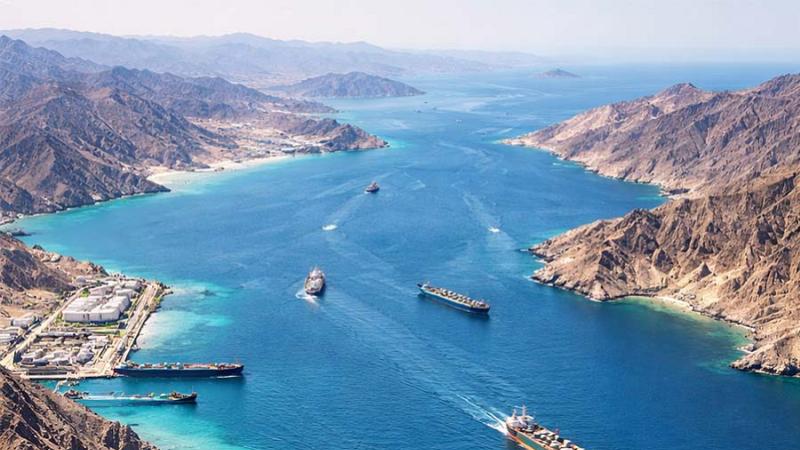
Adding to the escalation, the U.S. military announced a blockade of Iranian ports in the Persian Gulf starting Monday. According to U.S. Central Command, all vessels approaching Iranian ports near the Strait of Hormuz will be monitored and controlled, though other ships will not face restrictions on their passage. This strategic move, which could impact nearly one-fifth of global oil supplies passing through this vital waterway, has raised concerns about its effect on world markets.
Iran has condemned the U.S. action, with Revolutionary Guards claiming full control over the Hormuz region and warning of a stern response to any provocation. The commander of the Iranian Navy described the U.S. move as 'ridiculous' and assured ongoing surveillance of all regional activities. Iranian Parliament Speaker Mohammad Bagher Ghalibaf stated that Iran would not bow to pressure, asserting, "If war is imposed, we will fight; if dialogue is possible, we will pursue negotiations." Meanwhile, Foreign Minister Abass Araghchi accused the U.S. of backing out at the last moment, despite negotiations being just a step away from an agreement.
The direct impact of these tensions is evident in the energy markets. U.S. crude oil prices have surged past $100 per barrel, with Brent crude also rising sharply amid fears of supply disruptions due to regional instability.
Regional conflicts show no sign of easing. Lebanese Prime Minister Nawaf Salam indicated ongoing efforts to end the Israel-Hezbollah conflict, including plans to withdraw Israeli forces, free prisoners, and rebuild destroyed infrastructure. However, Israel has signaled its intention to continue military operations. Prime Minister Benjamin Netanyahu claimed that threats from Hezbollah have been contained during a visit to southern Lebanon, but acknowledged that "the security situation remains tense."
The UN Peacekeeping Mission reported incidents where Israeli tanks hit their vehicles twice and blocked some routes in southern Lebanon, further fueling international concern.
The ongoing conflict in Lebanon has claimed at least five lives, pushing the death toll to 2,055, according to the country’s health ministry. Israel has reiterated that the current ceasefire does not apply to Lebanon and vowed to continue its operations against Hezbollah.












 Indian Rupee
 U.S. Dollar
 European Euro
 UK Pound Sterling
 Swiss Franc
 Australian Dollar
 Canadian Dollar
 Singapore Dollar
 Japanese Yen
 Chinese Yuan
 Saudi Arabian Riyal
 Qatari Riyal
 Thai Baht
 UAE Dirham
 Malaysian Ringgit
 South Korean Won
 Swedish Kroner
 Danish Kroner
 Hong Kong Dollar
 Kuwaity Dinar
 Bahrain Dinar