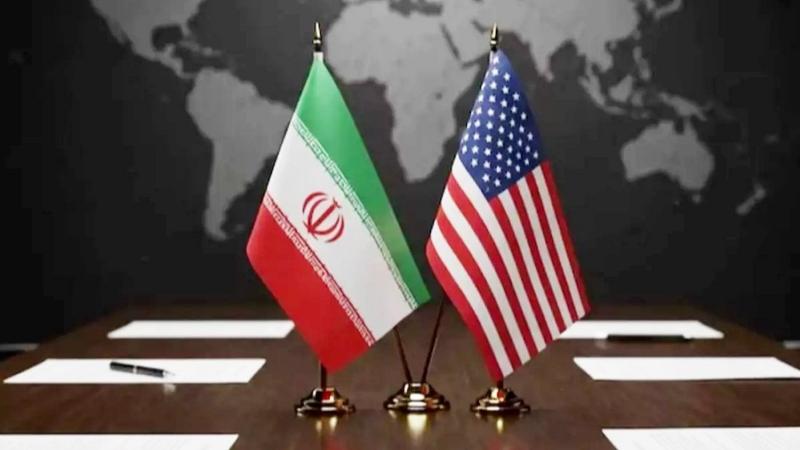
Apr 21, Kathmandu - As the ongoing ceasefire between the United States and Iran nears its end, both sides have issued warnings about their readiness for renewed conflict. While diplomatic efforts shift focus back to Pakistan, Tehran’s ambiguous stance on participation has complicated the situation further.
According to the White House, Vice President Kamala Harris is returning to Islamabad to advance the second phase of negotiations. However, Iran has expressed serious dissatisfaction with US actions, remaining silent on whether it will engage in talks. Tehran accuses America of breaching the ceasefire by imposing sanctions on its ports and seizing a vessel.
Iranian Parliament Speaker Mohammad-Bagher Ghalibaf has accused the US of using negotiations as pressure tactics and stated that talks are unacceptable amid heightened tensions. Iran is also reportedly preparing to unveil new strategies on the battlefield over the coming weeks. Meanwhile, Iran’s Revolutionary Guards have issued warnings targeting ships passing through the Strait of Hormuz without permission.
US President Donald Trump has accused Iran of violating the ceasefire by obstructing ships in the Strait of Hormuz. Since the start of the conflict initiated by the US and Israel on February 28, Tehran has allegedly blocked a significant oil transit route, impacting global markets. Trump claimed on social media that sanctions are weakening Iran and vowed to keep pressure until an agreement is reached.
As the ceasefire deadline approaches, Trump indicated that Iran must be ready to engage and warned that a large-scale attack could follow if the ceasefire ends. However, he suggested the possibility of a short extension remains unlikely.
Amidst the risks of renewed conflict, global oil prices have started to decline, influenced by hopes of an agreement and reopening of the Strait of Hormuz. While some normalcy has returned in Tehran following the ceasefire, many citizens remain uncertain and under economic strain, citing ongoing hardships and a weakened economy.
In a separate development, Israel and Lebanon have announced a ceasefire involving Hezbollah, with preparations for renewed talks in Washington. Nonetheless, sporadic clashes continue in southern Lebanon, and Israel has warned civilians in some areas not to return home.
The United Nations Security Council has condemned the killing of a French peacekeeper in Lebanon, blaming Hezbollah for the incident. The conflict between Israel and Hezbollah has resulted in thousands of casualties, according to official figures.
Another key issue in US-Iran talks is Tehran’s uranium enrichment program. While Trump claimed Iran agreed to transfer its uranium stockpile, Tehran has denied this, stating that no such transfer was ever discussed and that its uranium remains domestically held.









 Indian Rupee
 U.S. Dollar
 European Euro
 UK Pound Sterling
 Swiss Franc
 Australian Dollar
 Canadian Dollar
 Singapore Dollar
 Japanese Yen
 Chinese Yuan
 Saudi Arabian Riyal
 Qatari Riyal
 Thai Baht
 UAE Dirham
 Malaysian Ringgit
 South Korean Won
 Swedish Kroner
 Danish Kroner
 Hong Kong Dollar
 Kuwaity Dinar
 Bahrain Dinar