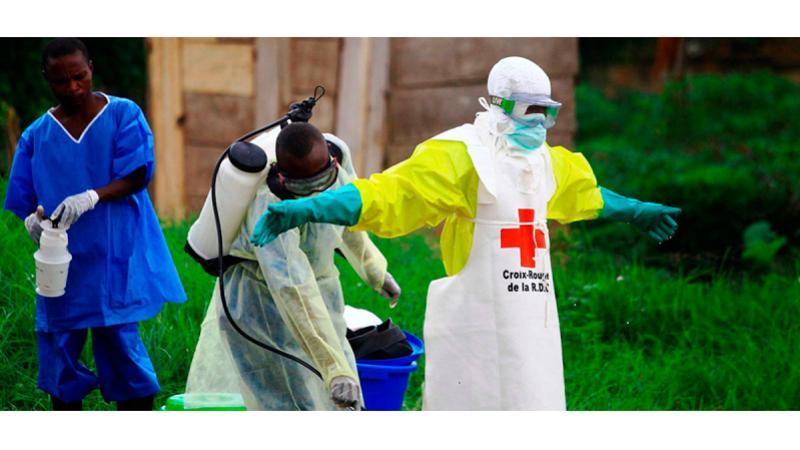
May 18, Kathmandu - Nepal has begun strengthening its health surveillance and control efforts following the recent Ebola outbreaks in the Democratic Republic of Congo and Uganda.
Since last week, over 90 deaths have been reported due to Ebola in these countries, with more than 336 suspected cases. Confirmed cases include 15 individuals across both nations.
In response, the World Health Organization (WHO) declared a Public Health Emergency of International Concern, prompting Nepal to initiate risk mitigation preparations. A meeting of the risk assessment committee was held on Monday, where officials emphasized heightened vigilance, according to Dr. Anuj Bhattchan, Director of the Epidemiology and Disease Control Division.
The Ministry of Health and Food Security has instructed health officials at airports to monitor travelers arriving from affected regions diligently. "We are asking airport health staff to pay special attention to travelers from these countries and inquire about their travel history," said Dr. Samir Kumar Adhikari, Deputy Spokesperson for the ministry. Those identified will be quarantined and tested as part of the precautionary measures.
While Nepal’s current risk level appears low given past experiences with Ebola spread from these regions, health authorities stress the importance of caution due to the constant movement of people worldwide.
Following WHO guidelines, Nepal is implementing five key preparedness measures: tracking and monitoring contacts of confirmed cases, strengthening hospital readiness, raising public awareness, ensuring testing materials and laboratories are prepared, and tightening border controls. The Ministry of Health has activated epidemic control branches to ensure swift response.
Dr. Bhattchan emphasized that Nepal’s existing health infrastructure and prior pandemic response experience are guiding current preparations. "Our health desks at airports and border points are operational, and we are ready to initiate testing based on WHO directives," he stated.
Ebola, caused by the Ebola virus, manifests symptoms such as high fever, severe headache, loss of appetite, vomiting, diarrhea, internal and external bleeding, and muscle pain, typically appearing three weeks after infection. The virus spreads through contact with an infected person's bodily fluids or contaminated objects, including corpses. Contact with infected wildlife is also a transmission route.
Timely treatment can prevent fatalities, but once infected, the mortality rate can range from 25% to 450%, making Ebola a significant public health threat. Authorities remain vigilant but optimistic, considering Nepal’s geographical distance from the outbreak zones.
















 Indian Rupee
 U.S. Dollar
 European Euro
 UK Pound Sterling
 Swiss Franc
 Australian Dollar
 Canadian Dollar
 Singapore Dollar
 Japanese Yen
 Chinese Yuan
 Saudi Arabian Riyal
 Qatari Riyal
 Thai Baht
 UAE Dirham
 Malaysian Ringgit
 South Korean Won
 Swedish Kroner
 Danish Kroner
 Hong Kong Dollar
 Kuwaity Dinar
 Bahrain Dinar