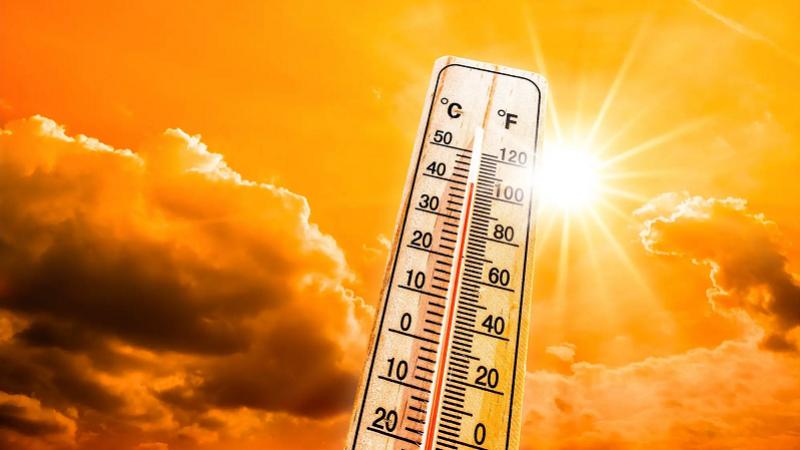
May 28, Kathmandu - The United Nations has issued a stark warning that the next five years could witness some of the hottest and most risky climate conditions in history, with new temperature records likely to be set globally. According to the UN's weather and climate body, from 2026 to 2030, the average worldwide temperature is expected to stay at or near current record levels.
The World Meteorological Organization (WMO) projects a 75% chance that the five-year average temperature between 2026 and 2030 will exceed the pre-industrial average of 1850-1900 by more than 1.5°C, signaling a deepening climate crisis. Since 2015, the warmest years on record have occurred, with WMO forecasting the continued trend could lead to a new "hottest year" before 2031.
As this report is released, parts of Western Europe are experiencing unprecedented heatwaves, with record-breaking temperatures recorded in the UK and France during May. The region is under the influence of a high-thermal system often described as a "hot dome."
The WMO emphasizes that the global average temperature will likely remain at or near record levels through 2026-2030. There is an 86% chance that at least one year within this period will surpass 2024, currently the hottest year on record. Additionally, the phenomenon of El Niño—expected to develop by late 2026—could further drive up global temperatures, potentially making 2027 another record-breaking hot year.
El Niño, a natural climate cycle that raises sea surface temperatures in the central and eastern tropical Pacific, influences weather patterns worldwide, causing significant changes in wind, rainfall, and temperature. Historically occurring every two to seven years, this cycle can last from nine to twelve months.
The UN's 2015 Paris Agreement set a target to limit global warming to below 2°C above pre-industrial levels, ideally capping it at 1.5°C. These benchmarks are based on the temperature averages from 1850-1900, before large-scale fossil fuel combustion.
The latest WMO update estimates that from 2026 to 2030, the global surface temperature will be 1.3°C to 1.9°C above pre-industrial levels. There is a 91% probability that at least one year in this period will temporarily exceed 1.5°C, with the entire five-year average likely surpassing this threshold by 75%. However, the chance of any single year exceeding 2°C remains very low, at less than 1%.
The report also warns that Arctic temperatures are rising much faster than the global average, with projections indicating that Arctic temperatures during the upcoming winter (November to March) could be approximately 2.8°C above the 1991-2020 average—more than three times the global rate of warming.
While brief surpassing of the 1.5°C limit is possible, the UN clarifies that temporary breaches do not negate the long-term goal of the Paris Agreement, which relates to sustained averages over decades.
The report, compiled by the UK Met Office and WMO, includes forecasts from 13 organizations. It also highlights regional variations in rainfall patterns from May to September 2026-2030, with increased precipitation expected in the Sahara, Northern Europe, Alaska, and Siberia, and prolonged droughts forecasted in the Amazon.















 Indian Rupee
 U.S. Dollar
 European Euro
 UK Pound Sterling
 Swiss Franc
 Australian Dollar
 Canadian Dollar
 Singapore Dollar
 Japanese Yen
 Chinese Yuan
 Saudi Arabian Riyal
 Qatari Riyal
 Thai Baht
 UAE Dirham
 Malaysian Ringgit
 South Korean Won
 Swedish Kroner
 Danish Kroner
 Hong Kong Dollar
 Kuwaity Dinar
 Bahrain Dinar