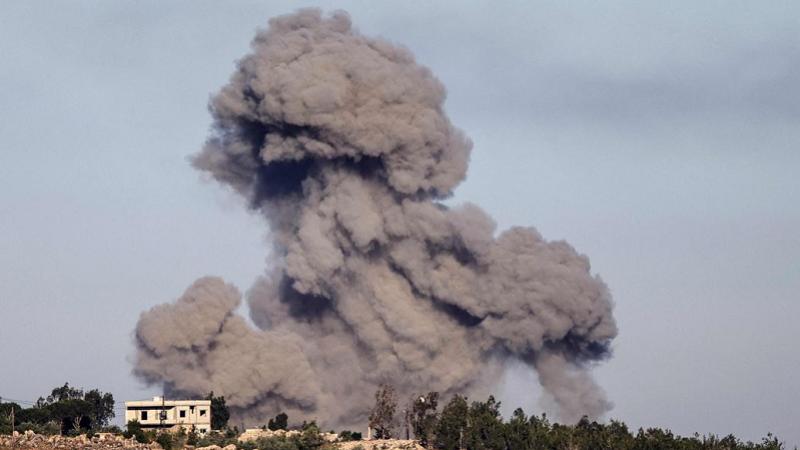
Jun 12, Kathmandu - U.S. President Donald Trump has claimed that an agreement with Iran could be imminent, asserting that military threats have been temporarily halted and negotiations are progressing positively. However, Tehran has clarified that no final decision has been reached, and the path to a potential deal remains unclear amid conflicting reports from both sides.
In a statement on Friday, Iranian Foreign Ministry spokesperson Ismail Baqai indicated that negotiations are ongoing but no definitive agreement has been struck. He emphasized that while consensus on most issues is close, new demands from the U.S. have stalled the process.
President Trump, on the other hand, claimed that the agreement has been "approved at a high political level" and announced that attacks and bombings on Iran have been suspended. He indicated that the timing and location of the signing would be revealed soon, suggesting that talks are moving in a positive direction. Following his remarks, global financial markets responded with a surge in stock prices and a dip in oil prices.
Trump also asserted that the United States and regional allies, particularly Israel, are involved in the negotiations, and that the main points and detailed framework of the deal have been approved by all parties.
Contrary to Trump's optimistic claims, Iran has rejected the assertion, stating that no final agreement has been reached. Tehran accused the U.S. of repeatedly changing its stance, which has complicated negotiations. Iranian media reports have also expressed skepticism, noting that Trump has claimed multiple times over recent months that an agreement was close, yet no resolution has materialized.
Meanwhile, Trump has indicated that Iran's Supreme Leader has accepted the deal, citing discussions with Israeli Prime Minister Benjamin Netanyahu. He suggested that the agreement would include dismantling Iran's nuclear capabilities and disabling missile infrastructure.
Regional diplomatic efforts are also intensifying. Back-channel talks mediated by Pakistan and Qatar are reportedly underway, while Egypt has urged both sides to seize available opportunities for dialogue.
These diplomatic initiatives follow the February 28 joint U.S.-Israel attack on Iran, which was halted after an April ceasefire, yet a permanent resolution remains elusive amid ongoing tensions.
In Tehran, however, citizens are growing increasingly frustrated by war and economic hardship. Majeed, a 35-year-old pharmacist, expressed skepticism about trusting any immediate deal, citing the deepening mistrust between the two nations.
Iranian military leaders have warned that any renewed U.S. attack would be met with strong resistance. Additionally, Iran has tightened surveillance at the Hormuz Strait, limiting oil and gas shipments "until further notice," further impacting global energy markets.
As the conflicting narratives from Washington and Tehran continue, the geopolitical landscape of the Middle East remains uncertain, with the prospects of a breakthrough still hanging in the balance.

















 Indian Rupee
 U.S. Dollar
 European Euro
 UK Pound Sterling
 Swiss Franc
 Australian Dollar
 Canadian Dollar
 Singapore Dollar
 Japanese Yen
 Chinese Yuan
 Saudi Arabian Riyal
 Qatari Riyal
 Thai Baht
 UAE Dirham
 Malaysian Ringgit
 South Korean Won
 Swedish Kroner
 Danish Kroner
 Hong Kong Dollar
 Kuwaity Dinar
 Bahrain Dinar