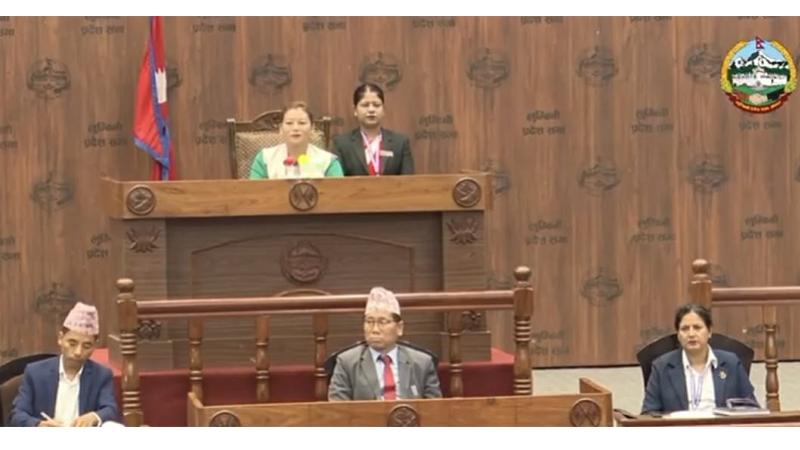
Jun 18, Kathmandu - Lumbini Province has demonstrated significant improvement in internal revenue collection during the first 11 months of the current fiscal year. As of late Jestha 25, the provincial government has collected NPR 5.14 billion in internal revenue, marking a 12% increase compared to the same period last year.
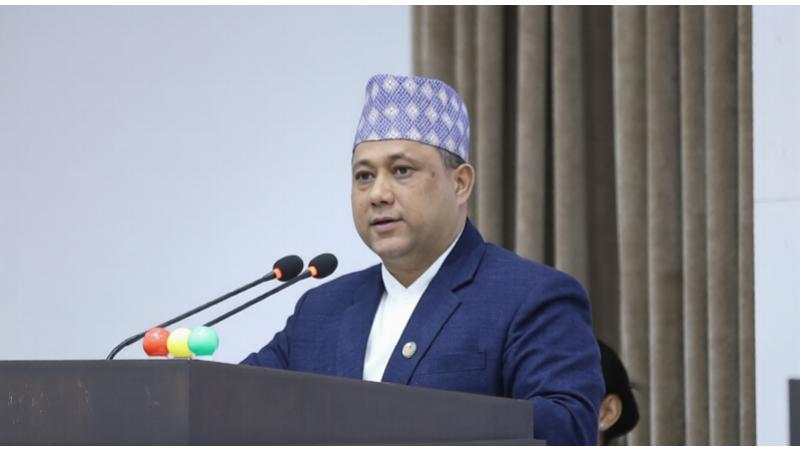
According to the financial report presented by Minister of Economic Affairs and Planning, Dhanendra Karki, the province has deposited NPR 26.577 billion into its reserve fund. This fund comprises grants received from the federal government, revenue sharing, and internal sources.
The provincial government has spent NPR 17.4782 billion so far this fiscal year, accounting for approximately 44.85% of the allocated budget. Of this expenditure, NPR 10.119 billion was allocated for capital projects, while NPR 736.73 million was spent on current expenses.
Under the financial transfer to local bodies, NPR 193.23 million has been allocated, with a utilization rate of 56.42%.
A major highlight is the successful completion of the first phase of the Lumbini Capital Management and Development Program, a flagship project for the province. The physical progress of this project stands at 100%, with financial progress at 95.58%. The administrative building constructed under this project has been operational since Baishakh 21.
Minister Karki stated that the province's economic growth rate is projected at 2.87% for this fiscal year. However, growth has been subdued due to sluggish expansion in transportation, communication, and trade sectors, along with stagnant agricultural growth. Last year, the province’s GDP growth rate was 4.27%.
The province is expected to generate a gross domestic product (GDP) of NPR 937 billion this year, contributing approximately 14.2% to the national GDP.
Regarding infrastructure, electricity access has reached 98.6%, and internet services have expanded to nearly 80% of households in the province.
The province’s revenue has seen a significant boost from federal transfers, including fiscal equalization grants, conditional grants, special grants, complementary grants, and revenue sharing, as detailed in the financial report.














 Indian Rupee
 U.S. Dollar
 European Euro
 UK Pound Sterling
 Swiss Franc
 Australian Dollar
 Canadian Dollar
 Singapore Dollar
 Japanese Yen
 Chinese Yuan
 Saudi Arabian Riyal
 Qatari Riyal
 Thai Baht
 UAE Dirham
 Malaysian Ringgit
 South Korean Won
 Swedish Kroner
 Danish Kroner
 Hong Kong Dollar
 Kuwaity Dinar
 Bahrain Dinar