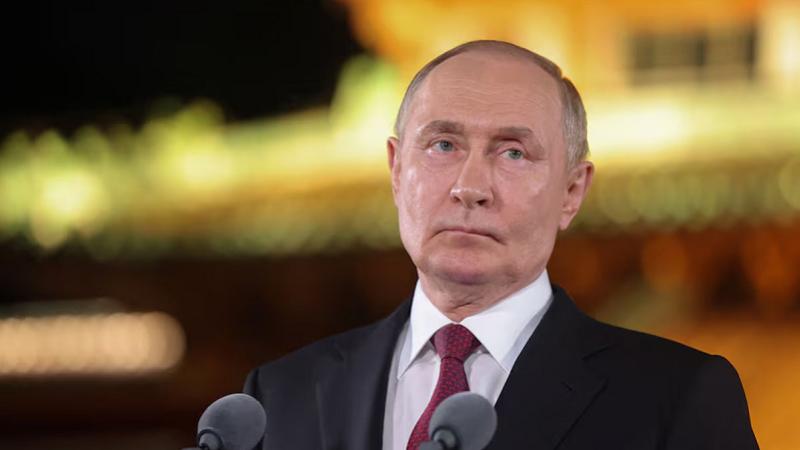
Aug 07, Kathmandu - A recent US intelligence report suggests that Russia may launch an attack on NATO member countries within the next few years. The Wall Street Journal first disclosed that Russia might test NATO’s response by targeting one of its member states through cyberattacks, small-scale military incursions, or other hybrid tactics.
According to the report, Russian President Vladimir Putin faces difficulties in achieving a quick victory in Ukraine, prompting him to consider destabilizing NATO by attacking a member nation. Three knowledgeable sources familiar with US intelligence assessments indicated that Putin could undertake limited actions to challenge NATO’s collective defense commitment without provoking a full-scale military response.
The report highlights that such actions might include cyberattacks, hybrid warfare, or minor invasions, primarily aimed at testing NATO’s unity and response capabilities. Under NATO’s Article 5, an attack on one member is considered an attack on all, but the circumstances surrounding cyber and hybrid assaults complicate the application of this clause.
Intelligence estimates suggest that Russia’s potential attack could occur as early as this fall, with a timeline extending to 2029, US television network CNN reported. While the likelihood of a ground invasion remains low, the risk could increase over time. Putin may target Baltic countries or Poland if he decides to escalate, although exact timings and methods remain uncertain.
US and NATO officials believe that Putin may exploit tensions to escalate NATO-Russia hostilities, especially if he fails to find an “exit strategy” from the Ukraine conflict that preserves his reputation. Russia’s military setbacks in Ukraine and mounting domestic pressures have led US intelligence to revise earlier assessments that he would avoid provoking NATO.
Senior NATO military spokesperson Martin O’Donnell declined to comment on classified intelligence but assured that NATO remains vigilant and prepared for any scenario. Meanwhile, Russia has been accused of conducting various activities in NATO territories, including drone attacks in Ukraine’s port city and incursions into Polish airspace.
Recent incidents include a drone attack at a residential building in Romania and the detection of explosive-laden drones at Germany’s Leipzig/Halle Airport, which has heightened European security concerns. US intelligence officials suggest these drones are linked to Russian agencies, although Germany has yet to formally blame Russia.
The timing of these assessments coincides with rising worries over US weapons stockpiles, which have been strained due to prolonged military aid to Ukraine and large-scale conflicts involving Iran. The stockpiles of precision strike missiles, anti-tank systems, and Stingers are reportedly under pressure, although the Pentagon denies shortages.
President Trump has previously expressed dissatisfaction over reports of declining US ammunition reserves, claiming that the US still has a surplus of weapons and that production is ongoing. Diplomatic efforts led by the US and Europe to end the Ukraine conflict have recently slowed, even as sanctions on Russia continue to impact its economy.

















 Indian Rupee
 U.S. Dollar
 European Euro
 UK Pound Sterling
 Swiss Franc
 Australian Dollar
 Canadian Dollar
 Singapore Dollar
 Japanese Yen
 Chinese Yuan
 Saudi Arabian Riyal
 Qatari Riyal
 Thai Baht
 UAE Dirham
 Malaysian Ringgit
 South Korean Won
 Swedish Kroner
 Danish Kroner
 Hong Kong Dollar
 Kuwaity Dinar
 Bahrain Dinar