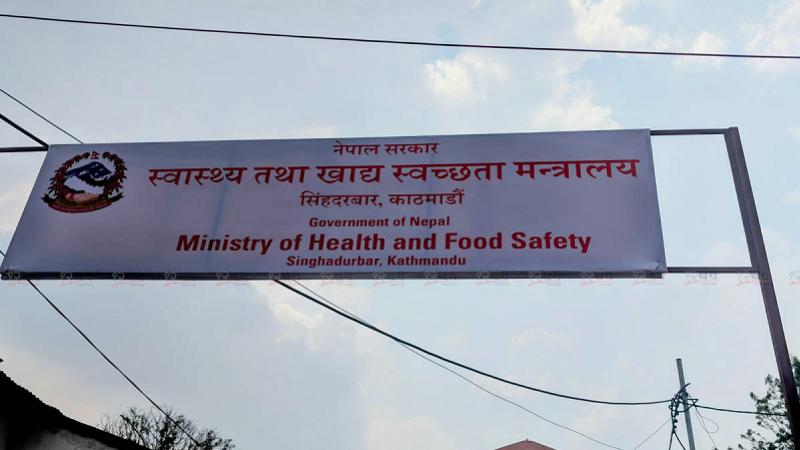
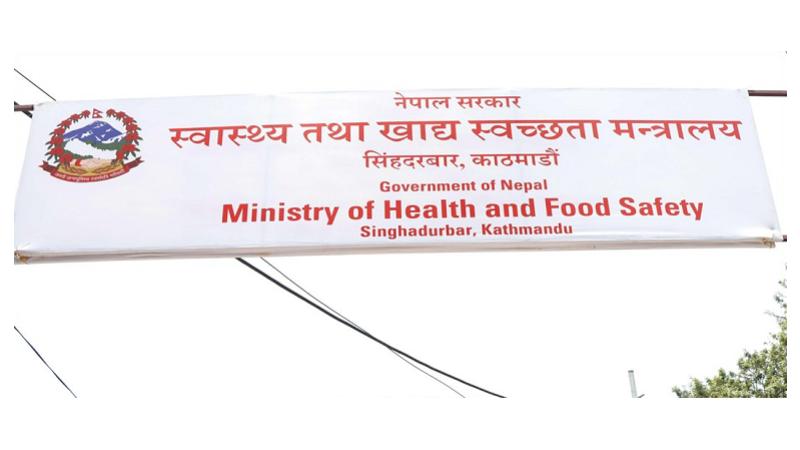
Aug 14, Kathmandu - The Government of Nepal has proposed a legal framework to offer free treatment worth up to NPR 10 million. The Ministry of Health and Food Safety has drafted the "Human Body Burn (Treatment and Rehabilitation) Act, 2083" to ensure accessible and prioritized care for burn patients.
The draft law aims to reduce financial burdens on burn victims, prevent treatment denial, and provide tiered treatment services based on the severity and nature of burns. The Ministry has opened the draft for public consultation, inviting suggestions and feedback.
Under the proposed provisions, burn victims will receive initial treatment costing up to NPR 300 thousand free of charge from designated health facilities. If further treatment exceeding this amount is necessary, the "Burn Treatment Fund" will cover an additional NPR 700 thousand with prior approval from the fund’s managing committee. This ensures that each patient can access treatment worth up to NPR 10 million at no cost.
The legislation mandates that no hospital or healthcare worker can refuse treatment to burn victims, prioritizing their care regardless of infrastructural or personnel limitations. In cases where immediate treatment or referral is required but unavailable, health facilities must provide initial stabilization and promptly transfer the patient to higher-level facilities. Refusing such transfer could result in fines ranging from NPR 25,000 to NPR 50,000.
The draft classifies burns into two categories based on severity: General Burn and Severe Burn. Burns affecting at least 10% of a child's body or 15% of an adult's body are considered severe. Burns involving the face, eyes, neck, limbs, or other sensitive areas exceeding 5%, as well as burns caused by electricity or chemicals affecting respiratory systems, are also categorized as severe. Conditions requiring skin grafts or surgeries are included within the severe burn category.
Treatment protocols will be tiered according to this classification. Basic treatment for general burns will be available at all health centers with general surgeons, while severe burns will require specialized services at designated burn treatment centers. A specialized burn center with at least 25 beds is proposed to ensure appropriate care based on the severity and nature of burns.
To support burn victims financially, the draft recommends establishing a "Burn Treatment Fund," sourced from contributions by sectors directly involved with burn risks, such as electricity, LPG gas, and petroleum companies. Funds will be used exclusively for treatment expenses, with provisions for additional costs up to NPR 700 thousand with prior approval.
In cases where a burn incident is proven to result from negligence or failure to fulfill responsibilities by individuals, organizations, or agencies, the entire treatment cost will be recoverable from the responsible party. If the treatment expenses have been covered by the fund, they must be reimbursed by the responsible entity.
The draft also proposes fines ranging from NPR 25,000 to NPR 50,000 for refusing treatment or referral, and penalties of similar amounts if negligence leads to burn incidents and treatment is not provided.
The Ministry of Health has called for public feedback and suggestions on the draft law until Bhadra 3, 2083, through the Ministry’s legal department, aiming to refine and enact the legislation to enhance burn care in Nepal.







 Indian Rupee
 U.S. Dollar
 European Euro
 UK Pound Sterling
 Swiss Franc
 Australian Dollar
 Canadian Dollar
 Singapore Dollar
 Japanese Yen
 Chinese Yuan
 Saudi Arabian Riyal
 Qatari Riyal
 Thai Baht
 UAE Dirham
 Malaysian Ringgit
 South Korean Won
 Swedish Kroner
 Danish Kroner
 Hong Kong Dollar
 Kuwaity Dinar
 Bahrain Dinar