Aug 14, Kathmandu - The White House has released a report accusing more than 40 countries, including Canada, India, Mexico, Japan, and South Korea, of assisting China in evading U.S. import tariffs. According to the report, China has successfully used these countries to ship goods and bypass billions of dollars in U.S. tariffs.
The report claims that through these channels, China has been able to avoid paying substantial tariffs, resulting in a significant loss of revenue for the U.S. government and affecting American jobs. White House trade advisor Peter Navarro stated that this practice has caused harm to U.S. employment and revenue worth billions of dollars.
In response, a spokesperson from the Chinese Embassy in Washington criticized the U.S. tariffs, asserting that "no one wins in a trade war." They argued that the U.S. is using state power against Chinese companies and emphasized that unilateral decisions regarding transshipment trade through third countries can negatively impact other nations' interests.
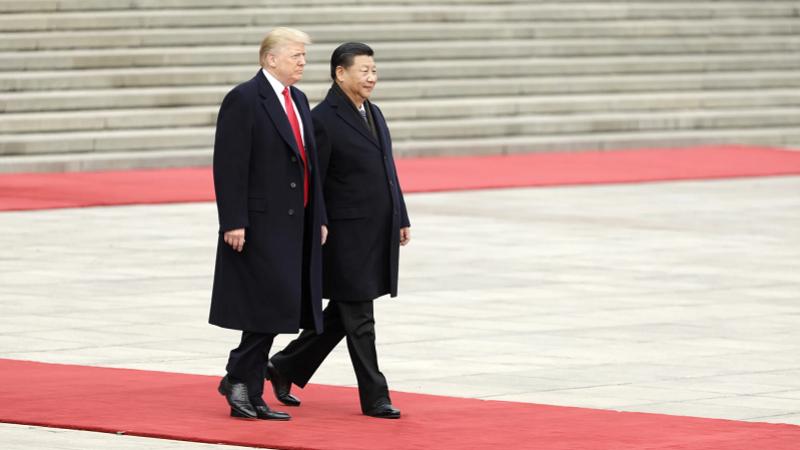
This report was made public amid ongoing trade restrictions between the U.S. and China and ahead of a scheduled meeting between President Donald Trump and Chinese President Xi Jinping in Washington this September.
The White House cited studies from both government and private sources indicating that goods valued between $30 billion and $3 trillion are being routed through countries with lower tariffs before reaching the U.S. This process is referred to as 'transshipment,' where goods are shipped via intermediate countries before arriving at their final destination.
The U.S. alleges that China has exploited countries with lower import tariffs as 'transit hubs'—repackaging and rebranding goods to conceal their true origin, a practice described in the report as "fraud under the guise of paperwork."
The report states, "The current 'transshipment scam' has not only increased in scale and speed but also involves a sophisticated shadow global network that China uses to evade tariffs."
The White House has also announced the use of artificial intelligence (AI) to detect such activities.
According to Chng Pao Lee, an economics associate professor at Singapore Management University, the report could strengthen the U.S.'s bargaining power in upcoming negotiations with China. She told BBC that Washington might argue that China maintains access to the U.S. market through third countries, which could influence future trade agreements to include not only direct Chinese exports but also supplies routed through third nations.
She added that some of these supply chain changes may also stem from restructuring production centers and supply chains, though countries with close ties to Chinese supply networks could face increased risks and costs.
While most tariffs were temporarily suspended after negotiations in May 2025, restrictions between the U.S. and China have not been entirely lifted. The U.S. has imposed bans on humanoid robots from China, and China has tightened restrictions on drone exports.
President Trump, in April 2025, announced broad import tariffs on dozens of trading partners, asserting that tariffs are an effective tool to strengthen U.S. employment and the economy. Some of these tariffs have been invalidated by the Supreme Court, but Trump has continued to implement new tariffs through alternative legal channels, maintaining his trade policies.
















 Indian Rupee
 U.S. Dollar
 European Euro
 UK Pound Sterling
 Swiss Franc
 Australian Dollar
 Canadian Dollar
 Singapore Dollar
 Japanese Yen
 Chinese Yuan
 Saudi Arabian Riyal
 Qatari Riyal
 Thai Baht
 UAE Dirham
 Malaysian Ringgit
 South Korean Won
 Swedish Kroner
 Danish Kroner
 Hong Kong Dollar
 Kuwaity Dinar
 Bahrain Dinar