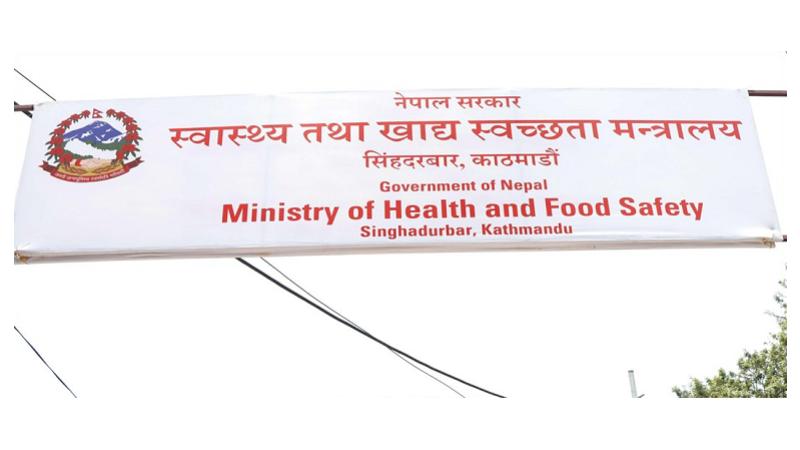
Aug 14, Kathmandu -The Ministry of Health and Food Safety has announced a groundbreaking move to improve the accuracy and transparency of mortality data in hospitals nationwide. Under the new 'Hospital Mortality Record Management System Procedures, 2082,' all deaths occurring in government, community, and private hospitals will now be documented with detailed medical causes and stored digitally, ending the era of vague or concealed death records.
The ministry released full details of the procedure today on its official website, emphasizing adherence to international standards and the World Health Organization’s disease classification system. The new system mandates that hospitals disclose initial, intermediate, and definitive causes of death, ensuring comprehensive documentation for every case—whether the patient was admitted, died en route, or was brought in dead, including post-mortem reports.
A key feature of this system is the assignment of a unique identification number (UIN) to each deceased individual. Hospitals will issue a death certificate with the medical cause and the UIN, which families can then use at local registry offices (ward offices) to register the death easily under personal event registration laws.
Furthermore, the death data will be integrated with the health management information system and the national registry and registration department. This integration aims to make legal procedures and registration transparent and prevent any falsification or discrepancies in death records.
The new procedures also compel hospitals not only to maintain records but also to develop action plans to reduce preventable deaths. Hospitals will be required to analyze causes and statistics regularly to improve healthcare quality, strengthen management, and implement preventive measures.
To facilitate smooth implementation, a mobile application will be launched, and committees have been formed at federal, provincial, and local levels to oversee and monitor the system’s rollout across the country.
This pioneering initiative marks a significant step toward accountability and improved healthcare data management in Nepal.
















 Indian Rupee
 U.S. Dollar
 European Euro
 UK Pound Sterling
 Swiss Franc
 Australian Dollar
 Canadian Dollar
 Singapore Dollar
 Japanese Yen
 Chinese Yuan
 Saudi Arabian Riyal
 Qatari Riyal
 Thai Baht
 UAE Dirham
 Malaysian Ringgit
 South Korean Won
 Swedish Kroner
 Danish Kroner
 Hong Kong Dollar
 Kuwaity Dinar
 Bahrain Dinar