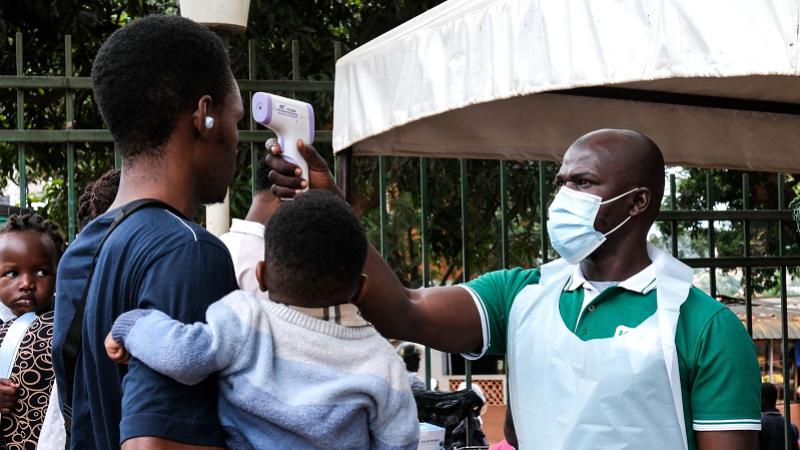
Aug 15, Kathmandu - The Democratic Republic of Congo has confirmed that the ongoing Ebola outbreak has rapidly spread and reached its sixth province. Health officials reported that the number of infections has surged to 4,727, with 2,214 deaths so far.
According to a recent official report, the outbreak has affected 55 health zones across several regions, including Bus-Ule, Hato-Ule, Ituri, North Kivu, South Kivu, and Sopo provinces.
Since the outbreak began, 976 confirmed patients have recovered, but community transmission continues unabated, health authorities said.
The latest government data indicates a contact tracing rate of 82.6%, emphasizing the need to strengthen community-based surveillance and contact identification efforts.
The World Health Organization (WHO) Director-General Tedros Adhanom Ghebreyesus warned of a high mortality rate within communities and highlighted that new cases are being identified among individuals not listed in contact tracing lists, complicating containment efforts.
Historically, the most severe Ebola outbreak was during 2014-2016 in West Africa, which infected over 28,600 people.
WHO Emergency Health Program Executive Director Chikwe Ihekweazu noted that the virus may have been spreading for two to three months before the outbreak was officially detected, with investigations ongoing to determine the exact origin of transmission.
WHO Director for Emergency Response, Dr. Abderrahman Mahamoud, cautioned that the outbreak could persist for about six months, with some estimates suggesting it might last up to nine months. Efforts are underway to shorten the duration of the epidemic.
The Africa CDC has warned that if not contained, this outbreak could last over a year and potentially become the largest Ebola epidemic on record.
To reverse this trend, experts recommend a combination of measures, including increased surveillance and community response, ensuring access to essential health services, strengthening referral systems for suspected cases, deploying additional medical supplies, and improving coordination of response efforts.














 Indian Rupee
 U.S. Dollar
 European Euro
 UK Pound Sterling
 Swiss Franc
 Australian Dollar
 Canadian Dollar
 Singapore Dollar
 Japanese Yen
 Chinese Yuan
 Saudi Arabian Riyal
 Qatari Riyal
 Thai Baht
 UAE Dirham
 Malaysian Ringgit
 South Korean Won
 Swedish Kroner
 Danish Kroner
 Hong Kong Dollar
 Kuwaity Dinar
 Bahrain Dinar