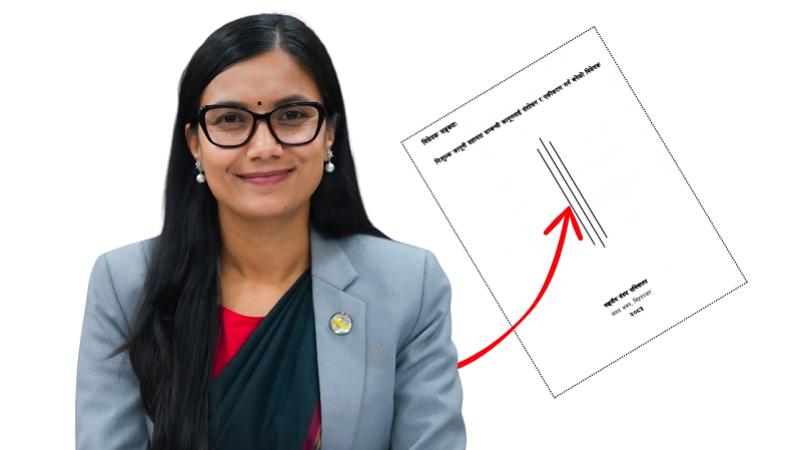
Sep 21, Kathmandu - The Nepali government has introduced a bill in the House of Representatives to expand the scope of free legal aid. The proposed legislation aims to provide legal assistance to a wider range of citizens, including marginalized and disadvantaged communities, who currently face barriers under the existing Legal Aid Act 2054.
The bill, registered by Law Minister Sobita Gautam, stipulates that individuals with incomes below the current threshold, victims of gender-based violence, armed conflict, and other vulnerable groups will be eligible for free legal aid. It emphasizes support for children, senior citizens, persons with disabilities, women from socially or educationally marginalized backgrounds, Dalits, indigenous peoples, Tharus, minorities, Muslims, backward classes, and sexual and gender minorities.
Economic hardships faced by impoverished Khas Aryas, laborers, farmers, and residents of marginalized regions will also qualify them for free legal assistance. Victims of domestic or sexual violence, martyrs, armed conflict victims, protesters, and those affected by caste-based discrimination will be included as beneficiaries.
The bill also ensures legal aid for individuals detained in criminal cases who cannot afford legal representation at the time of arrest, as well as for prisoners and individuals ordered by courts to receive such aid. Applicants seeking assistance must submit their requests through local authorities or district legal aid committees, headed by district judges.
To access the services, applicants need to provide a declaration of their inability to afford legal representation, along with a recommendation from local bodies. For instance, individuals detained in criminal cases must submit a self-declaration and a recommendation from the investigating officer. The bill proposes that applications can also be made online and that court fees will be waived in cases where beneficiaries cannot pay immediately.
The legislation emphasizes the provision of qualified legal professionals for legal aid, addressing concerns that unskilled lawyers have led to unfavorable outcomes for some litigants. It mandates the availability of expert legal practitioners in relevant fields to ensure quality assistance.
Remarkably, the bill introduces for the first time the provision of psychosocial counseling services for those seeking legal aid. The district committees will prepare a list of service providers, ensuring holistic support for beneficiaries.
The bill adopts progressive measures, including the use of sign language for persons with disabilities and financial assistance to cover travel, accommodation, and meal expenses for those unable to afford transportation to courts or legal aid centers. It also encourages voluntary legal aid (pro bono services) from legal professionals.
District committees will maintain a roster of willing legal aid providers, with lawyers required to submit quarterly reports on services rendered. There is also a push for mandatory pro bono participation by senior advocates, citing concerns that experienced lawyers sometimes refuse free legal assistance.
Once passed by the House of Representatives, the bill will proceed to the National Assembly for approval. After presidential ratification, the legislation will come into effect, marking a significant step toward inclusive justice in Nepal.












 Indian Rupee
 U.S. Dollar
 European Euro
 UK Pound Sterling
 Swiss Franc
 Australian Dollar
 Canadian Dollar
 Singapore Dollar
 Japanese Yen
 Chinese Yuan
 Saudi Arabian Riyal
 Qatari Riyal
 Thai Baht
 UAE Dirham
 Malaysian Ringgit
 South Korean Won
 Swedish Kroner
 Danish Kroner
 Hong Kong Dollar
 Kuwaity Dinar
 Bahrain Dinar