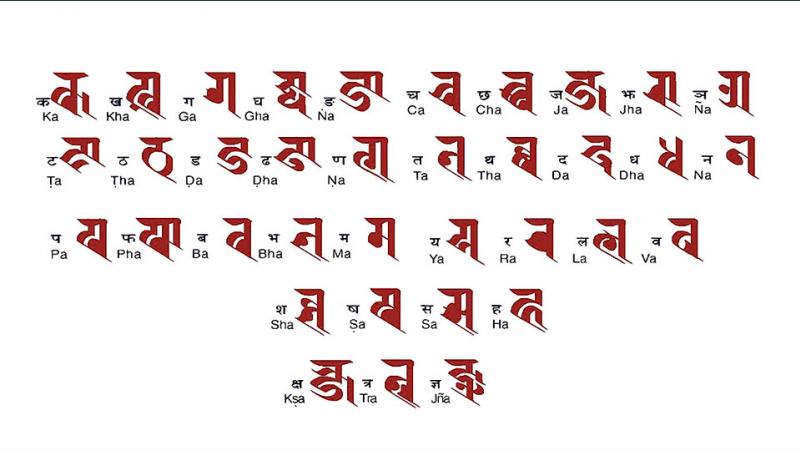
April 22, Kathmandu- Kathmandu Metropolitan City has signed a service agreement with 172 trainers to teach Nepal Bhasa at school level.
The metropolis has signed a one-year agreement with the assistant trainers who have been selected from a total of 516 applicants and have undergone pre-service training.
It has been said that all the teachers who have signed the agreement will be assigned to the community schools to teach the local language in the schools.
According to the constitutional provision, it is mandatory to teach one subject number 100. Accordingly, the metropolis has hired new teachers for local language teaching.
Although textbooks have been prepared for both community and institutional schools, at present they will be implemented only for community schools, so teachers will be hired accordingly.
According to Ram Prasad Subedi, chief of the education department of the metropolis, the metropolis has 172 teachers from its own resources. There will be an arrangement to appoint such teachers under the service contract and to extend the period every one year.
The corporation is preparing to have at least one teacher in each community school, up to three teachers depending on the number of students and the need to teach the subject which is being implemented compulsorily from this academic session.
Currently, due to the spread of karona around the world, the class has not been able to operate in physical presence.
Even though Nepali language has been used in Nepal since the Lichhavi period, it has been used as an official language in the Malla period, said Professor Sharad Vir Kanshakar of the Central Department of Nepali Language.
According to Professor Kanshakar, the language has been used in all the three districts of Kathmandu Valley and 12 districts of Bagmati Pradesh recently.
He said that it was a remarkable task for KAMPA to make local textbooks compulsory for reading. Professor Kanshakar said that choosing this subject in reading would be of great help to the new generation to get information about the culture of the Newar community.
Local Textbook Preparation KAMPA has already prepared local textbooks for basic classes 1 to 8. A textbook titled 'Yeh Dey Mhasike' has been prepared as a compulsory subject.
Textbooks have been prepared to be implemented in 91 community and 541 institutional schools in the metropolis from this academic session. Now all these schools will have 100 integer local subjects.
Part 3 of the Constitution of Nepal provides for fundamental rights. Under this, in sub-sections (2) and (3) of section 32, provision has been made to teach one subject study as a local curriculum in the community and institutional schools under it from every local level of the country.
The metropolis has prepared the textbook on the basis of the same arrangement. The party had started preparations from last April / May. Due to the situation arising out of COVID-19 and its impact, the work including printing of textbooks was delayed.
The textbook covers topics such as festivals, culture, skills, business, moral education, processions, stone fountains, pots, pans, health and hygiene, lifestyle, personality introduction, language and script.
Similarly, topics such as people's life, art, food, festivals and traditional sports of the major caste Newars have been covered. The meaning of Nepali words and phrases in the book is written in Nepali language.
There are 42,000 students in community schools and 220,000 students in institutional schools. There are 1,791 teachers working in community schools.
According to Moti Khanal, member secretary of the Nepal Language Management Committee and education officer, 80 people have been trained to teach Nepal Bhasa in institutional schools.
Curriculum and textbooks will be distributed free of cost in community schools and curriculum will be provided free of cost in institutional schools.
They will have to buy textbooks. From class 1 to 3, 100 out of 100 integers will be practiced. In class 4 and 5, there will be 75 practical and 25 percent theoretical reading.
In classes 6, 7 and 8, there will be 50 practical and 50 percent theoretical reading.




 Indian Rupee
 U.S. Dollar
 European Euro
 UK Pound Sterling
 Swiss Franc
 Australian Dollar
 Canadian Dollar
 Singapore Dollar
 Japanese Yen
 Chinese Yuan
 Saudi Arabian Riyal
 Qatari Riyal
 Thai Baht
 UAE Dirham
 Malaysian Ringgit
 South Korean Won
 Swedish Kroner
 Danish Kroner
 Hong Kong Dollar
 Kuwaity Dinar
 Bahrain Dinar